
LA TERRE SAUVAGE
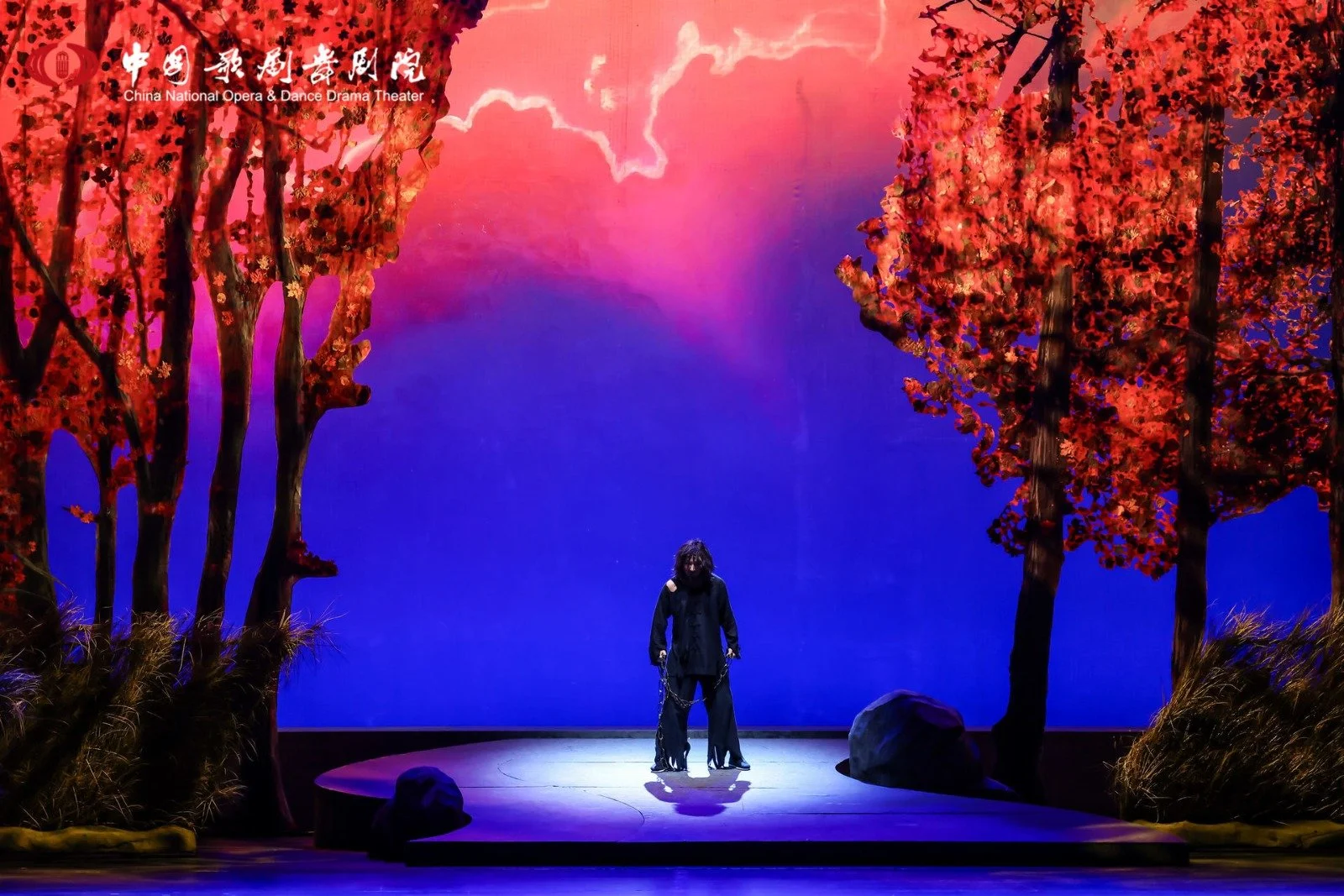
Créée à Pékin en 1987, « La Terre Sauvage » de Jin Xiang revient sur une scène européenne après près de trente ans d'absence. Le Théâtre national d'opéra et de danse de Chine la joue samedi et dimanche salle Pleyel, deux soirs seulement.
Un homme sort de prison après huit ans. Il rentre au village pour tuer celui qui a détruit sa famille, et découvre en arrivant que son ennemi est mort avant lui. Pire : la femme qu'il aime depuis toujours a épousé le fils de cet ennemi. L'histoire ferait un bon opéra vériste italien, ou un western. C'est celle de La Terre Sauvage (Yuanye), à l'affiche de la salle Pleyel samedi 5 septembre à 20 heures et dimanche 6 à 18 heures. Elle vient d'une pièce de théâtre écrite en 1936 par Cao Yu (1910-1996), l'un des fondateurs du théâtre parlé moderne en Chine, et créée à Shanghai l'année suivante. Cao Yu avait lu Ibsen et surtout Eugene O'Neill, et il laissait entrer dans son texte le surnaturel et l'hallucination. Mauvais timing : la scène chinoise ne jurait alors que par le réalisme social, et la critique le lui a longtemps reproché. Il a fallu attendre les années 1980 pour que la pièce soit redécouverte, l'auteur, alors septuagénaire, participant lui-même à sa reprise. Le compositeur Jin Xiang s'en empare dans la foulée, avec un livret de Wan Fang, la propre fille de Cao Yu. L'opéra est créé à Pékin en 1987.
À quoi ça ressemble ? Les musicologues parlent d'un vérisme à la chinoise. On y entend les grandes lignes vocales et le drame serré hérités de Puccini, mais aussi des percussions traditionnelles qui viennent d'un tout autre monde sonore. Ce n'est ni de l'opéra européen déguisé, ni de l'opéra de Pékin. Ce mélange explique sans doute que le public chinois y revienne depuis quarante ans. La dernière reprise à Pékin date de 2024. Un mot sur l'argument des producteurs, qui annoncent une première européenne. À prendre avec des pincettes : l'œuvre est sortie de Chine dès 1992, au Kennedy Center de Washington, avant d'être montée à Sarrebruck en 1997, puis à Vancouver l'année suivante. Ce qui est vraiment nouveau, c'est la venue de la troupe. Le Théâtre national d'opéra et de danse de Chine joue pour la première fois en France, dans une mise en scène conçue pour cette tournée. Quatre dates en tout sur le continent : Madrid les 1er et 2 septembre, Paris ensuite, et c'est fini.
L'opération est portée par China Arts and Entertainment Group, l'organisme public chargé d'exporter les productions chinoises, avec le producteur français Le Monstre Orchestra, une formation d'une centaine de musiciens habituée à circuler entre symphonique et musiques populaires. Son cofondateur, André de Semlyen, explique vouloir faire entendre à Paris les grands répertoires du monde dans les versions qui font référence chez eux. Cela tient de la diplomatie culturelle autant que de la découverte artistique, et les deux ne s'excluent pas. Reste que l'occasion est courte et le manque, lui, bien réel. Les salles parisiennes programment Verdi, Puccini et Wagner ; elles n'ont jamais fait de place à l'opéra chinois du vingtième siècle, qui s'est pourtant construit en dialoguant avec eux. Deux soirées n'y changeront pas grand-chose. Elles permettent au moins de s'en faire une idée, en mandarin surtitré en français, dans une salle du faubourg Saint-Honoré bien faite pour ça.
La Terre Sauvage, de Jin Xiang. Salle Pleyel, 252 rue du Faubourg-Saint-Honoré, Paris 8e. Samedi 5 septembre à 20 heures, dimanche 6 septembre à 18 heures. En mandarin surtitré en français. À partir de 10 €. sallepleyel.com
Created in Beijing in 1987, Jin Xiang's La Terre Sauvage returns to a European stage after nearly thirty years away. The China National Opera and Dance Drama Theater performs it at Salle Pleyel on Saturday and Sunday, two nights only.
A man walks out of prison after eight years. He goes back to his village to kill the person who destroyed his family, and learns on arrival that the man died before he could get to him. Worse, the woman he has loved all his life is now married to that man's son. It could be the plot of an Italian verismo opera, or of a western. It is the plot of La Terre Sauvage (Yuanye), at Salle Pleyel on Saturday 5 September at 8pm and Sunday 6 September at 6pm. The story began as a play, written in 1936 by Cao Yu (1910-1996), one of the founders of modern spoken theatre in China, and staged in Shanghai the following year. Cao Yu had read Ibsen and, above all, Eugene O'Neill, and he let the supernatural and the hallucinatory into his text. The timing was poor. Chinese theatre at that moment believed only in social realism, and critics held it against him for decades. Not until the 1980s was the play taken seriously again, with its author, then in his seventies, involved in the revival himself. The composer Jin Xiang picked it up soon after, working from a libretto by Wan Fang, Cao Yu's own daughter. The opera premiered in Beijing in 1987.
What does it sound like? Musicologists tend to call it a Chinese verismo. The long vocal lines and the tight dramatic pacing come from Puccini; the percussion comes from somewhere else entirely, out of a ritual tradition with no European equivalent. It is neither European opera in disguise nor Peking opera. That hybrid quality probably explains why Chinese audiences have kept returning to it for forty years. The most recent Beijing revival was in 2024. A word about the producers' claim of a European premiere, which deserves qualifying. The work left China as early as 1992, at the Kennedy Center in Washington, then travelled to Saarbrücken in 1997 and Vancouver the year after. What is genuinely new here is the company. The China National Opera and Dance Drama Theater is performing in France for the first time, in a staging made for this tour. Four dates on the continent in all: Madrid on 1 and 2 September, Paris after that, and then it is over.
The whole thing is presented by China Arts and Entertainment Group, the state body responsible for taking Chinese productions abroad, together with the French producer Le Monstre Orchestra, an ensemble of around a hundred musicians used to moving between symphonic and popular repertoires. Its co-founder, André de Semlyen, says he wants Paris to hear the world's major repertoires in the versions that count as definitive at home. This is cultural diplomacy as much as artistic discovery, and the two are not mutually exclusive. The window is narrow, and what it opens onto is a real gap. Paris programmes Verdi, Puccini and Wagner; it has never made room for twentieth-century Chinese opera, which was built in conversation with them. Two evenings will not fix that. They will at least give some sense of it, sung in Mandarin with French surtitles, in a hall on the Faubourg Saint-Honoré well suited to the occasion.
La terre Sauvage, by Jin Xiang. Salle Pleyel, 252 rue du Faubourg-Saint-Honoré, Paris 8e. Saturday 5 September at 8pm, Sunday 6 September at 6pm. In Mandarin with French surtitles. From 10 euros. sallepleyel.com